
Why Daily Habits Work Better Than Scheduled Ones
Daily Habits Create Better Follow Through and Eliminate Decision Fatigue
Personal Note
While for many people over 50 it may simply be hard to keep up with the commitment of a schedule, the Highly Sensitive Person (HSP) may also find a “three-days-a-week” plan to be a hidden source of stress.
Personally, I struggled for years with keeping up the habit of exercising consistently. My plan was to do it three times per week, Tuesday, Thursday and Saturday. But not only did the schedule loom over my week, something would come up and the exercise would be postponed to the next “official” day.
At some point I changed my approach and instead of scheduling my exercise on specific days I decided I would do it daily. That may seem like a counterintuitive idea for someone who couldn’t even keep up with three times per week, but it wasn’t.
By switching to daily exercise I knew that I wasn’t going to be perfect, but that single shift removed excuses. It worked because when something is daily you do not wait for a new official start date, you simply continue.
My Daily Habits
Since then I have adopted more daily habits including drinking a warm glass of water in the morning and skipping breakfast, therefore fasting for 16 hours. I then eat a salad for lunch with most of the protein, fat, vegetables and healthy carbs my body needs for the day.
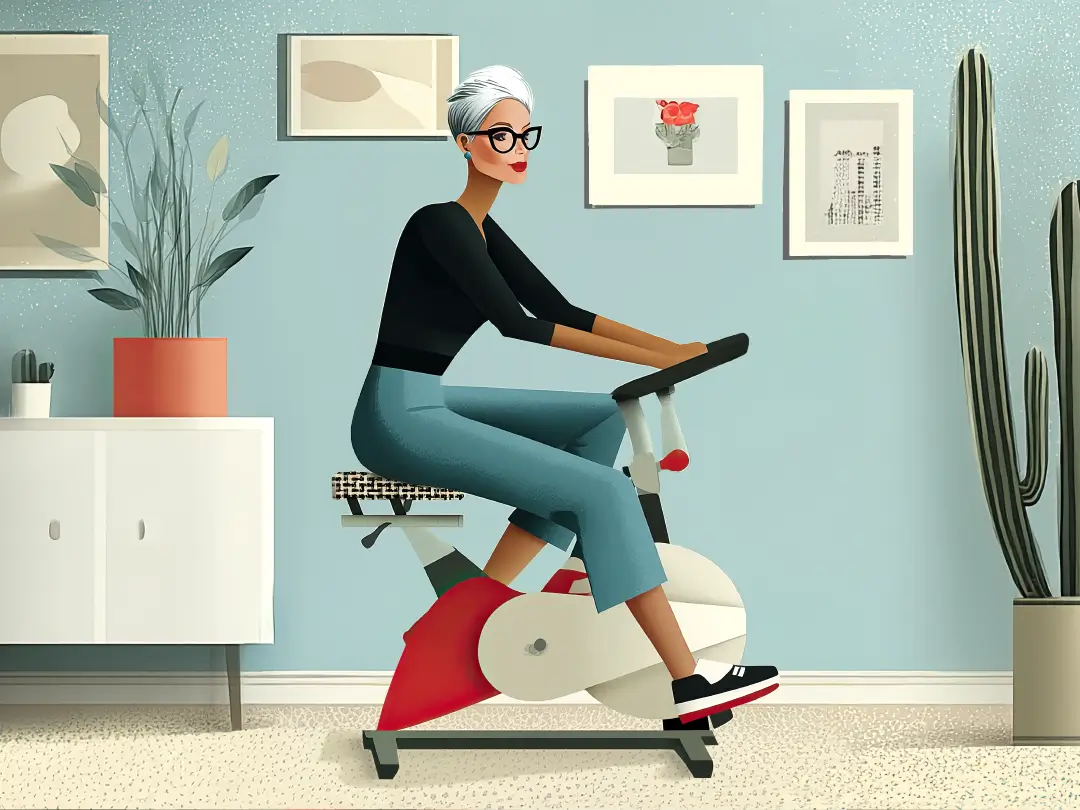
Each morning I also spend 30 minutes bicycling on my recumbent bike and every afternoon, after I finish working, I either go for a walk outside or walk on the treadmill for 30 minutes.
I work at home so I am able to “sprinkle” more good habits during the day that also give me a reason to get up from my desk and move my body. For example in the morning I go through each room in my home and tidy up, some days I also do a load of laundry or a bit of vacuuming.
If it’s a nice day I also sit outside for 20 minutes to get some vitamin D, but I avoid sun exposure when the UV is over 4, since a high UV index can cause skin damage. To make this easier, I set up my phone to show me both temperature and UV on the opening screen, so I don’t have to guess.
Easy Does It
This brings me to the next point: it’s much easier to establish a good habit if you make it convenient for yourself.
Most recently, I started doing several sets of upper body exercises with elastic bands and weights. I spread them out during the day and strategically leave the weights where I can see them and pick them up easily during my breaks. I also keep my exercise bands in a convenient spot where I can use them without fussing.
If driving to the gym adds cost and time to your routine, focus on working out at home with weights and elastic bands or inexpensive equipment. I paid $160 for my recumbent bike 10 years ago and it still works fine. My treadmill was less than $500 and works great for fast walking. The easier it is, the less you will resist doing it, and it will naturally become part of your daily routine.
The same goes for food. Make sure you always have the basic ingredients for daily healthy meals so you are not tempted to break the habit. And when it comes to tidying up, give each item in your home a place where it belongs. Later, if the home gets messy, you can start by putting each item back in the general area or room where it belongs, making the process a lot faster.
In this article I give you more insights on daily habits, their benefits and the simple science behind why they work.
A quick-reference cheat sheet with the key points is available for download at the bottom of the page.
Why Scheduled Habits Fall Apart
Scheduled habits look reasonable but they are fragile. The moment something interrupts them the habit disappears for days at a time. If Monday fails you wait for Wednesday, if Wednesday fails you wait for Friday and so on. There is always another start date and that delay is the trap.
Research on habit formation shows that repetition is the thing that builds automatic behavior. Scheduled habits offer fewer chances to repeat the behavior which means fewer chances to build momentum.
Daily removes the room for negotiation. You do not need to debate whether today is a habit day. It already is. If life gets in the way you simply continue the next morning without guilt.
Daily Habits and the Human Brain
Daily habits also shift identity. You stop thinking of yourself as someone who tries to exercise three times a week. You become someone who exercises, someone who eats at least one healthy meal a day, and someone who maintains a tidy home. Identity is stronger than planning because you are not pushing yourself each time, you are following who you already are.
Daily habits lower decision fatigue as well. The body responds better when it does not have to process dozens of small choices.
Studies suggest that up to seventy percent of daily behavior is habitual. Health-related habits often begin to feel automatic after two to three months of repetition. The brain responds to steady repetition in a familiar context, which is why daily habits settle in more easily than scheduled ones.
If you enjoy reading about this, the book Atomic Habits by James Clear explains how small repeated actions reshape identity and behavior. It fits well with the idea of daily habits because it focuses on consistency rather than intensity.
Daily Habits that Make Life Easier as We Age
Here are simple habits anyone can adopt. Each one is small enough to do on a low energy day and useful enough to make a real difference over time.
A glass of water in the morning
You wake up slightly dehydrated. Water supports digestion and circulation and helps the body wake up. Warm or room temperature is easier to tolerate. Lemon is optional. The benefit is hydration and, for some people, stimulates elimination.
Sunlight
Light regulates your internal clock and supports better sleep. Exposure to sunlight when the UV index is moderate is ideal. It helps vitamin D production which affects bone health, muscle strength and immunity.
Movement
Even fifteen minutes of walking improves blood sugar control, cardiovascular health, brain function and mood. It also reduces stiffness. Indoors or outdoors does not matter.
One healthy meal
A salad a day or a simple balanced plate gives the body fiber, micronutrients and healthy fats. It stabilizes energy and prevents random snacks.
Light daily tidying
A few minutes a day keep the home emotionally steady. Clutter affects the nervous system. A small reset is easier than a large cleanup.
A supplement routine
Taking supplements daily makes them useful. Irregular use does not. Most people over fifty benefit from consistency with vitamin D or magnesium depending on individual needs. Personally I set an alarm to remind myself to take my supplements after lunch, otherwise I may just walk away and forget about it.
Preparation for the next day
Setting out clothes or prepping a few items reduces morning stress and prevents decision fatigue.
Nightly routine
Dim the lights and avoid loud or brain stimulating activities. Embrace a routine that includes oral and skin care. As hard as it may feel when you are tired, it will not only help you sleep better, but its benefit will have long lasting effects.
Disclaimer: This article is for informational purposes only and may include curated or personal content. It is not medical advice. Please consult a licensed provider before making health decisions.
One-on-One Consulting
If you want help building sustainable daily habits, Anyes offers one-on-one consultations focused on practical next steps.
Share this article
If you’re exploring more ways to stay healthy, you may also like:
- 7 Wellness Hacks That Actually Work
- Which Pain Reliever Is Safest for People Over 50?
- How to Use Artificial Intelligence to Manage your Health
- Types of Alternative Medicine: What They Do and How to Choose
To be notified when new content is published, please join our mailing list below.
Download or Print the Cheat Sheet
Why Daily Habits Work Better Than Scheduled Ones
Check Out the Book by James Clear Here